Art Meets Science: Innovative Creative Hobbies That Combine Artistry with Scientific Principles
Bridging Two Worlds: The Creative Pursuits of Today
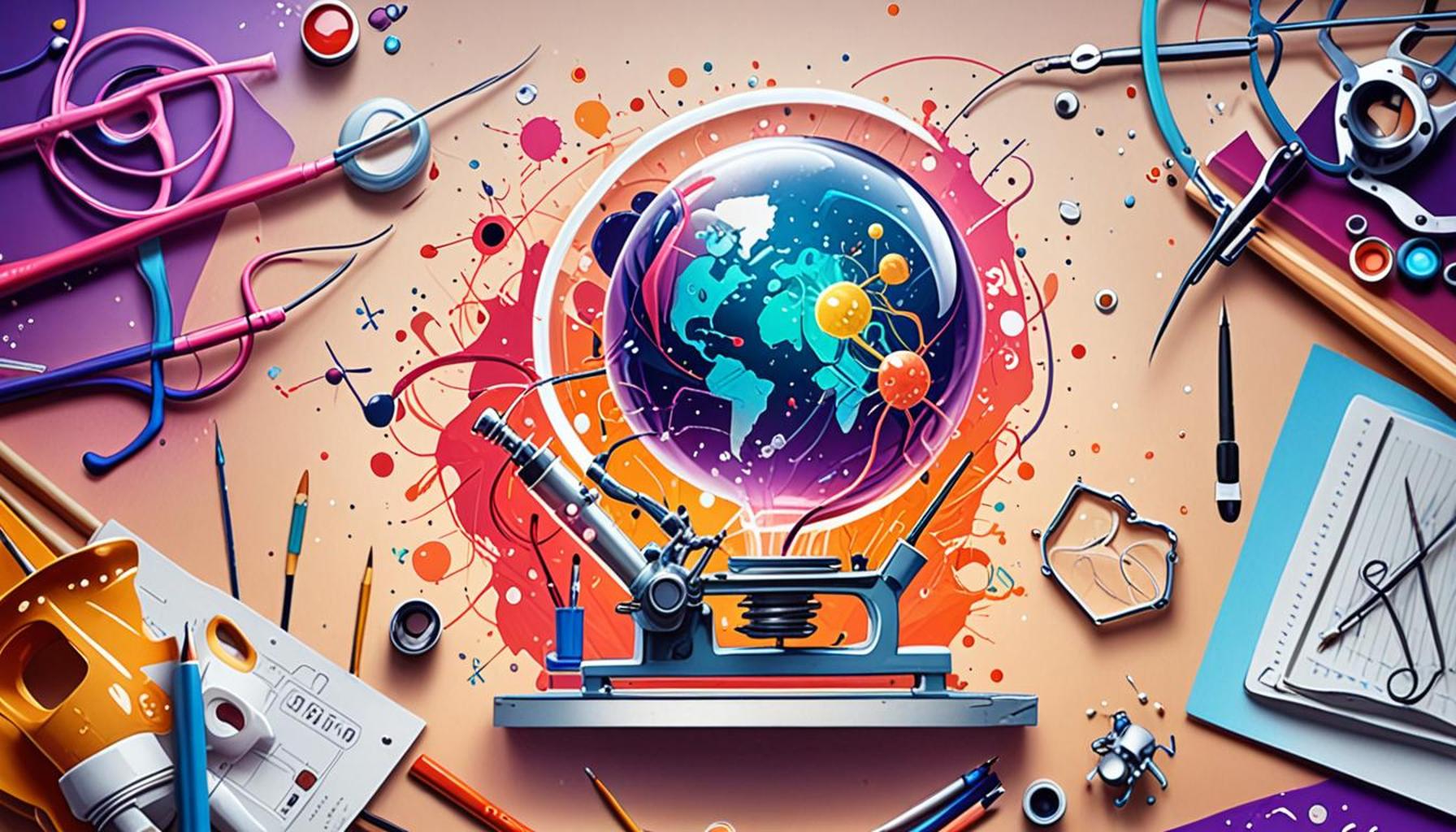
In today’s dynamic landscape, the boundaries between creativity and innovation are increasingly blurred, inviting individuals to explore a plethora of hobbies that celebrate this intersection. These pursuits not only showcase artistic brilliance but also incorporate scientific methodologies, fostering a unique synergy that is both enlightening and inspiring. Imagine stepping into a realm where the hues of paint mingle with the precision of engineering, or where the pulse of a heartbeat becomes a canvas for artistic expression. This fusion is not just theoretical; it is a vibrant reality manifesting through numerous creative endeavors.
Take, for instance, the field of digital art and coding. Artists are employing sophisticated algorithms to create mesmerizing visuals that transform mere pixels into stunning masterpieces. Platforms like Processing and OpenFrameworks enable creators to blend programming skills with visual artistry, allowing for interactive installations that respond to viewer engagement. These projects often challenge viewers’ perceptions and encourage them to consider art from a more dynamic and participatory perspective.
Similarly, photography and chemistry share a fascinating relationship, especially in the realm of experimental photography. Artists are using chemical reactions to create unique photographic prints, exploring how light exposes different materials in astonishingly beautiful ways. The pioneering techniques of artists like Michael Resch are showcasing how chemical processes can yield stunning images that serve as both art and science experiments, evoking curiosity about the underlying physical principles.
- Eco-Art, a movement gaining traction across the United States, emphasizes sustainability through artistic expression. Artists such as Chris Jordan utilize recycled materials to craft thought-provoking pieces that highlight environmental degradation. Their work not only attracts attention but also calls for a dialogue about environmental issues, inspiring communities to consider their ecological footprints.
- Bio-Art takes this a step further by incorporating living organisms into artistic displays. Artists like Eduardo Kac are pioneering this exciting field, creating works that challenge the definitions of life and art. For example, Kac’s famous genetically modified glowing bunny, Alba, provokes discussions about ethics in science and the role of living beings in art.
These innovative hobbies encourage not only individual creativity but also foster collaboration across various disciplines, leading to groundbreaking discoveries and inventions. By merging the foundational principles of science with the emotive power of art, enthusiasts are shaping a new narrative that transcends traditional boundaries and invites broader participation.
As we continue to explore these unique intersections, we can anticipate a flourishing future where creativity and innovation seamlessly intertwine. The dialogue between art and science is not just for a select few; it invites everyone to engage, experiment, and elevate their creativity, resulting in a richer, more interconnected world.
DIVE DEEPER: Click here to discover amazing upcycling ideas
Exploring the Intersection of Creativity and Innovation
As the dialogue between art and science continues to evolve, a myriad of fascinating hobbies have emerged that blend these two realms. Engaging in these creative practices not only nurtures personal expression but also sparks curiosity about the inherent scientific principles at play. Dive deeper into innovative hobbies that reflect this dynamic interplay, where artists are becoming scientists and vice versa.
Sound Art is one avenue where auditory creativity converges with scientific exploration. Artists utilizing sound as their medium often delve into the physical properties of sonic waves, examining how frequency, amplitude, and resonance can create immersive experiences. For example, sound installations by artists like Maryanne Amacher employ scientific expertise in acoustics to craft environments that challenge our auditory perceptions. Through this integration, participants are invited to reflect on how sound influences human emotions and environments.
Furthermore, the world of 3D Printing has revolutionized artistic creation, granting artists the ability to materialize their visions using advanced technology. This method combines traditional design skills with modern engineering principles, allowing creators to explore new dimensions of form and function. By understanding the underlying mechanics of additive manufacturing, artists can produce everything from intricate sculptures to functional objects that merge aesthetic appeal with practical use, ultimately enhancing our daily lives.
Innovative Hobbies Fostering Creative Expression
Several innovative hobbies epitomize this fusion of artistry and scientific thought, engaging practitioners while contributing to broader discussions about culture, technology, and ethics:
- Maker Culture: This growing movement emphasizes DIY (do-it-yourself) innovation, where individuals leverage tools and technology to create unique projects. Maker spaces provide collaborative environments that nurture curiosity, often blending engineering skills with artistic flair, resulting in inventions that are both functional and beautifully crafted.
- Foraging and Art: Artists and naturalists are increasingly drawing inspiration from their surroundings, foraging for natural materials to drive their artistic processes. This practice intertwines botany with creativity as artists explore the ecological implications of their work, bringing attention to the importance of native plants and biodiversity.
- Data Visualization: In an age dominated by information, artists are stepping up to interpret complex data in visual formats. By combining graphical design with analytics, artists create compelling visual narratives that allow viewers to engage with statistics in profound and accessible ways, transforming data into an expressive and informative art form.
Through these diverse hobbies, individuals are not only highlighting their creativity but also enhancing their understanding of the world. By bridging disciplines, enthusiasts engage in a transformative process that encourages exploration and collaboration, ultimately leading to groundbreaking artistic expressions and scientific insights.
| Category | Description |
|---|---|
| Bioart | A field merging biology with artistic expression, using living cells. |
| Scientific Illustration | Crafting detailed visual representations of scientific concepts, aiding understanding. |
| Data Visualization Art | Transforming complex data into creative visual formats that engage viewers. |
The fusion of art and science has given rise to fascinating hobbies that stimulate both imagination and intellect. One notable category is Bioart, where artists utilize living cells or bacteria to create stunning works that question ethics and perceptions of life. These pieces are not only visually appealing but also provoke deep conversation about biotechnology and its implications. On the other hand, Scientific Illustration takes a more traditional route, yet remains equally enriching. Artists adept in this craft focus on creating meticulous drawings that enhance educational material. They breathe life into textbooks by rendering subjects like anatomy or flora with such accuracy that they become the bridge between mere information and immersive experience.Also noteworthy is Data Visualization Art, where numbers and statistics are transformed into compelling visuals. Through this medium, complex data narratives unfold, making critical global issues more accessible and engaging to the public. The demand for clear communication fosters a necessity for artistic methods that capture attention while conveying essential insights.
DISCOVER: Click here to uncover creative DIY ideas!
Breaking New Ground: Artistry Fueled by Scientific Inquiry
The intersection of art and science thrives on continual exploration and uncharted territories, where new hobbies are cultivating unorthodox synergies and fostering innovative talents. Within this dynamic ecosystem, various creative pursuits are gaining traction, encouraging practitioners to blend artistic dreams with empirical investigations. Here are a few more hobbies that illustrate this captivating convergence.
BioArt: Living Canvas
BioArt is an avant-garde movement that utilizes living organisms as artistic mediums. By engaging with biological materials—such as bacteria, fungi, and even human cells—artists are stretching the limits of traditional art to engage audiences with ecological and ethical questions. For instance, Eduardo Kac, a pioneer in the BioArt realm, famously created “GFP Bunny,” a genetically modified rabbit that glows green under blue light. This project not only provokes discussions about genetic engineering and bioethics but also highlights the potential for art to transcend the conventional limits of human creativity.
The Science of Color: Pigment and Chemistry
The study of color in art undeniably involves a strong foundation in chemistry. Artists experimenting with natural pigments—derived from minerals and plant-based materials—embody this interplay. For example, the use of indigo, a natural dye, involves understanding chemical reactions that produce the distinctive blue color. Furthermore, contemporary artists are increasingly embracing synthetic pigments, prompting inquiries into their environmental impact and sustainability. Hobbyists mixing their own paints often delve into the chemistry of pigment creation, exploring molecular structures while creating vibrant works of art.
Photography: The Lens of Science
Modern photography is a perfect example of the marriage between art and technology. Digital photography significantly involves understanding the physics of light, lenses, and sensors. Photographers and hobbyists explore concepts such as exposure, aperture, and shutter speed, employing these principles to transform ordinary scenes into extraordinary images. Beyond traditional photography, techniques like high-speed photography and UV photography delve into realms that the naked eye cannot perceive. This fusion of artistic eye and scientific technique yields captivating images that inspire wonder and curiosity about the nature of reality.
Crafting and Robotics: The Maker Movement
The Maker Movement has gained tremendous momentum in recent years, where crafting meets technology. Hobbyists combine their artistry with coding and robotics to create interactive installations that blend aesthetics and function. The process of building robotic sculptures, for instance, requires understanding electronics, mechanics, and artistic design principles. By utilizing tools such as microcontrollers and sensors, makers are not just creating art; they are redefining what art can be, transforming passive experiences into interactive narratives.
As we witness the evolution of these innovative hobbies, it is clear that the dialogue between art and science fosters a rich tapestry of creativity, pushing boundaries and challenging perspectives. From BioArt to robotics, individuals are not just creators; they are thinkers, experimenters, and collaborators who redefine the fabric of culture through the lens of scientific inquiry.
DISCOVER MORE: Click here to deepen your understanding
Embracing the Fusion of Art and Science
In conclusion, the fascinating intersection of art and science opens a multitude of creative horizons, inviting enthusiasts to explore innovative hobbies that merge aesthetic expression with scientific principles. Whether it is through BioArt that challenges ethical boundaries, the careful consideration of chemistry in pigment mixing, the technological innovations in photography, or the hands-on brilliance seen in the Maker Movement, these pursuits illustrate the power of synthesis between these two seemingly disparate fields.
As we delve into these innovative hobbies, we uncover a spectrum of possibilities that not only push the boundaries of creative expression but also spark critical conversations about our relationship with the natural world and our ever-evolving technologies. These artistic endeavors nourish our curiosity, compelling us to probe deeper into the mechanics of our universe while simultaneously creating aesthetically compelling works.
For those looking to explore new frontiers, engaging in these hobbies provides not just a means of creative fulfillment but also embodies the spirit of inquiry that drives both scientific exploration and artistic innovation. As we embrace this fusion, we are reminded that art is not just a product of human imagination but also a reflection of our understanding of the world around us. So, whether you’re an established artist, an aspiring scientist, or simply someone with a passion for creativity, the potential to innovate, experiment, and express is limitless when art meets science.
Related posts:
Exploring the World of Biophilic Design: Innovative Projects for Nature-Inspired Creative Hobbies
Crafting with Purpose: Innovative Community Projects that Promote Social Change through Creative Hob...
Technology and Creativity: How to Use 3D Printers in Artistic Hobbies
Collaborative Creative Hobbies: Building Community Through Innovative Group Projects
Exploring Sustainable Art Projects: Creating Beauty from Recycled Materials
Crafting with Code: Innovative Projects That Combine Programming and Creative Hobbies
Linda Carter is a writer and creative hobbies expert specializing in crafting, DIY projects, and artistic exploration. With extensive experience helping individuals discover their creative potential and bring their ideas to life, Linda shares her knowledge on our platform. Her goal is to empower readers with practical tips, inspiring ideas, and step-by-step strategies for success in the world of creative hobbies.